
01.07.2013
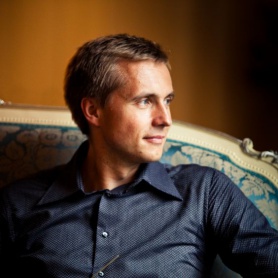
Vasily Petrenko: “It is harder for Vasily Barkhatov”
Over forty years have passed since the last performance of a Wagner opera at the Mikhailovsky Theatre, making the new production of Der fliegende Holländer a highly anticipated event. The new interpretation bears the signature of the Mikhailovsky’s Guest Conductor Vasily Petrenko and of Stage Director Vasily Barkhatov. The conductor sees his own task is simple compared to that of the director.
“The production period is short and intense. Such are the realities of working in music today. So it was vitally important, even before we started, to establish common ground between all the members of the creative team, and to come up with shared ideas on how to proceed. I have my own vision of Der fliegende Holländer. If the director had held a radically different view, how could we have worked together? That is why Vasily Barkhatov and I began discussing this story long before rehearsals began. We met several times in different European cities. I made my suggestions, and the other Vasily made his.
The work of an opera director is extremely difficult. For a conductor it is easier: I have the score in front of me, and even though perceptions of music have changed a lot in the 170 years since the first performance of the opera in Dresden — which was conducted by the composer — the score is still the same. When I conduct the orchestra I can vary the tempo or change the dynamics, but in general the music has not changed that much. Of course, musicians’ technical abilities are constantly progressing, but the difference between how music was played then and how it is played now is hardly significant. With the visual part of the production, everything is considerably more complicated.
In fact, Wagner specified in stage directions what the characters do, who goes where, and what actually happens. But if we had followed the composer’s stage directions to the letter, we would have been inviting the audience not to a theatre, but to an archaeological museum: there are many elements that would appear as total anachronisms. So it is very important to find the instances that will still be valid today, and to avoid the clichés that have accumulated over a century and a half.
This is the most important part of work on a new production: to determine where the boundary is — where you are still following the composer’s ideas, but are already adding your own interpretation. You need to decide how to leave the canonical text untouched while, at the same time, introducing elements for a modern audience. This is always very difficult, and is the main dilemma for a director. So, we have done everything possible to ensure that the ideas behind this production are shared ones. They have been conceived during a long dialogue between the two of us”.
“The production period is short and intense. Such are the realities of working in music today. So it was vitally important, even before we started, to establish common ground between all the members of the creative team, and to come up with shared ideas on how to proceed. I have my own vision of Der fliegende Holländer. If the director had held a radically different view, how could we have worked together? That is why Vasily Barkhatov and I began discussing this story long before rehearsals began. We met several times in different European cities. I made my suggestions, and the other Vasily made his.
The work of an opera director is extremely difficult. For a conductor it is easier: I have the score in front of me, and even though perceptions of music have changed a lot in the 170 years since the first performance of the opera in Dresden — which was conducted by the composer — the score is still the same. When I conduct the orchestra I can vary the tempo or change the dynamics, but in general the music has not changed that much. Of course, musicians’ technical abilities are constantly progressing, but the difference between how music was played then and how it is played now is hardly significant. With the visual part of the production, everything is considerably more complicated.
In fact, Wagner specified in stage directions what the characters do, who goes where, and what actually happens. But if we had followed the composer’s stage directions to the letter, we would have been inviting the audience not to a theatre, but to an archaeological museum: there are many elements that would appear as total anachronisms. So it is very important to find the instances that will still be valid today, and to avoid the clichés that have accumulated over a century and a half.
This is the most important part of work on a new production: to determine where the boundary is — where you are still following the composer’s ideas, but are already adding your own interpretation. You need to decide how to leave the canonical text untouched while, at the same time, introducing elements for a modern audience. This is always very difficult, and is the main dilemma for a director. So, we have done everything possible to ensure that the ideas behind this production are shared ones. They have been conceived during a long dialogue between the two of us”.