
06.08.2012
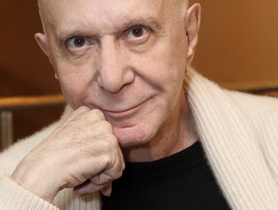
The Ballet World Mourns the Death of Roland Petit
The choreographer, who had a profound influence on the ballet art of the second half of the 20th century, died on the 10th of July at the age of 87. Nikita Dolgushin, People’s Artist of the USSR, spoke about the great dance master, whose death is a terrible loss for the entire ballet community.
“Last autumn, the Mikhailovsky Theatre hosted an evening of ballet dedicated to the artist, Hommage à Roland Petit. The concert brought together principal dancers from three European theatres and the maestro’s assistant Luigi Bonino was there. We expected Roland Petit himself, but his health wouldn’t allow him to travel. To my great regret, the meeting that the theatre had so carefully prepared, never took place.
I had a chance to meet Roland Petit when he choreographed Notre Dame de Paris in St. Petersburg and The Queen of Spades in Moscow. At some point, I learned snippets from a ballet based on Marcel Proust, hoping to show it to him. It sincerely pains me that I never got to connect with the choreographer as a dancer. It’s well known that Roland Petit loved working with Russian dancers, as we were completely in awe of him. He never kowtowed to his dancers. He set goals that might have seemed overly complicated, or even impossible. But he had the ability to not simply inspire, but to make his performers fall in love with him and with the choreography, and that gave them the strength to meet the challenge. He pushed dancers to grow and transform.
Roland Petit was full of surprises! He had a vivid, complex personality, and added an element of surprise to each of his works — be it a full-scale play or a small dance miniature. But this element of surprise didn’t stop his works from being exceptionally designed. He was a master of composition. He had a great sense of humour. His miniatures — many of which he created for his wife, the enchanting Zizi Jeanmaire — are a testament to that. He loved working with classical ballets. He created beautiful versions of The Sleeping Beauty, The Nutcracker, and Coppélia; and while he never broke away from traditional choreography, these productions were completely original, and reflected his worldview and his conception of dance.”
“Last autumn, the Mikhailovsky Theatre hosted an evening of ballet dedicated to the artist, Hommage à Roland Petit. The concert brought together principal dancers from three European theatres and the maestro’s assistant Luigi Bonino was there. We expected Roland Petit himself, but his health wouldn’t allow him to travel. To my great regret, the meeting that the theatre had so carefully prepared, never took place.
I had a chance to meet Roland Petit when he choreographed Notre Dame de Paris in St. Petersburg and The Queen of Spades in Moscow. At some point, I learned snippets from a ballet based on Marcel Proust, hoping to show it to him. It sincerely pains me that I never got to connect with the choreographer as a dancer. It’s well known that Roland Petit loved working with Russian dancers, as we were completely in awe of him. He never kowtowed to his dancers. He set goals that might have seemed overly complicated, or even impossible. But he had the ability to not simply inspire, but to make his performers fall in love with him and with the choreography, and that gave them the strength to meet the challenge. He pushed dancers to grow and transform.
Roland Petit was full of surprises! He had a vivid, complex personality, and added an element of surprise to each of his works — be it a full-scale play or a small dance miniature. But this element of surprise didn’t stop his works from being exceptionally designed. He was a master of composition. He had a great sense of humour. His miniatures — many of which he created for his wife, the enchanting Zizi Jeanmaire — are a testament to that. He loved working with classical ballets. He created beautiful versions of The Sleeping Beauty, The Nutcracker, and Coppélia; and while he never broke away from traditional choreography, these productions were completely original, and reflected his worldview and his conception of dance.”