
20.07.2012
Reviews to Match the Ovations
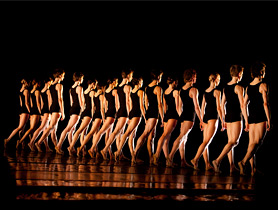
The premiere of Nacho Duato’s ballet Multiplicity: Forms of Silence and Emptiness was an outstanding event in the opinions of both the audience and ballet critics, whose views do not by any means always coincide.
Ballet reviewer Anna Gordeeva made a particularly insightful comment. After noting that the ballet had been a “real triumph” and that “for a long time the audience were reluctant to leave, demanding more and more curtain calls”, she remarked, “Regardless of the quality of a production, the critics are usually the first out of the auditorium. In this case, my colleagues just stood and clapped, forgetting about the time” (Moskovskie Novosti).
However, the applause has now faded away, and in expectation of the next performances, scheduled for 15 and 17 May, theatregoers have become readers, greedily devouring the reviews appearing one after another in print and electronic media.
This ballet “is a reminder that choreography is not a 100-year-old petrified monolith”, wrote Vedomosti columnist Anna Galayda. “Such a feeling is sorely lacking in our reality”.
“Many producers of ballet steps aspire to spirituality, but few are able to achieve this superbly expressed paradox: with the aid of bodies the choreographer demonstrates that the spirit is more powerful than the body”, was the sentiment expressed by Maya Krylova in Novye Izvestia.
Kommersant put forward the view that Multiplicity deserves to be placed alongside Nacho Duato’s greatest works, with Olga Fedorchenko describing it as “a dance essay in which notes, instruments and thoughts dance”, and enthusing that “Mr. Duato is a wonderful essayist”, going on to say that “few contemporary choreographers manage so easily to construct associative bridges between one subject and another, so naturally to interweave allusions to biographical events with their own interpretation of a piece of music, so elegantly to weave their own dance ‘comments’ into the fabric of the narrative”.
The heroes of the premiere were not only the dancers, who demonstrated “impeccable academic training”, but also the musicians. Leila Guchmazova noted that “Duato was being honest when he said that the Mikhailovsky is staging the real premiere of Multiplicity — the ballet has previously only been performed with a backing track, but now the polyphony is played by a live orchestra, making the production come to life” (Itogi).
The reviewers paid particularly close attention to Nacho Duato himself, who appeared on stage in the premiere performances. “He plays himself; the ballet opens up upon his entrance. The auditorium held its breath at that moment: that’s what you call charisma”, wrote Svetlana Naborshchikova. “A wave of Duato’s hand, and the bodies started trembling. Another wave and they froze, dissolving into the darkness. It was now obvious who the main figure was: not Bach, but Nacho, who reads the music as only he sees and feels it. And there can be no objection. He has that right. His personal creative stature permits him to be on intimate terms with Bach” (Izvestia).
“Indeed, that is as it should be. A master should know his own value”, wrote Maya Krylova on the same theme. “Duato in Multiplicity is a great talent: the best episodes in the ballet to Bach’s music can be described as truly harmonious” (Novye Izvestia).
Ballet reviewer Anna Gordeeva made a particularly insightful comment. After noting that the ballet had been a “real triumph” and that “for a long time the audience were reluctant to leave, demanding more and more curtain calls”, she remarked, “Regardless of the quality of a production, the critics are usually the first out of the auditorium. In this case, my colleagues just stood and clapped, forgetting about the time” (Moskovskie Novosti).
However, the applause has now faded away, and in expectation of the next performances, scheduled for 15 and 17 May, theatregoers have become readers, greedily devouring the reviews appearing one after another in print and electronic media.
This ballet “is a reminder that choreography is not a 100-year-old petrified monolith”, wrote Vedomosti columnist Anna Galayda. “Such a feeling is sorely lacking in our reality”.
“Many producers of ballet steps aspire to spirituality, but few are able to achieve this superbly expressed paradox: with the aid of bodies the choreographer demonstrates that the spirit is more powerful than the body”, was the sentiment expressed by Maya Krylova in Novye Izvestia.
Kommersant put forward the view that Multiplicity deserves to be placed alongside Nacho Duato’s greatest works, with Olga Fedorchenko describing it as “a dance essay in which notes, instruments and thoughts dance”, and enthusing that “Mr. Duato is a wonderful essayist”, going on to say that “few contemporary choreographers manage so easily to construct associative bridges between one subject and another, so naturally to interweave allusions to biographical events with their own interpretation of a piece of music, so elegantly to weave their own dance ‘comments’ into the fabric of the narrative”.
The heroes of the premiere were not only the dancers, who demonstrated “impeccable academic training”, but also the musicians. Leila Guchmazova noted that “Duato was being honest when he said that the Mikhailovsky is staging the real premiere of Multiplicity — the ballet has previously only been performed with a backing track, but now the polyphony is played by a live orchestra, making the production come to life” (Itogi).
The reviewers paid particularly close attention to Nacho Duato himself, who appeared on stage in the premiere performances. “He plays himself; the ballet opens up upon his entrance. The auditorium held its breath at that moment: that’s what you call charisma”, wrote Svetlana Naborshchikova. “A wave of Duato’s hand, and the bodies started trembling. Another wave and they froze, dissolving into the darkness. It was now obvious who the main figure was: not Bach, but Nacho, who reads the music as only he sees and feels it. And there can be no objection. He has that right. His personal creative stature permits him to be on intimate terms with Bach” (Izvestia).
“Indeed, that is as it should be. A master should know his own value”, wrote Maya Krylova on the same theme. “Duato in Multiplicity is a great talent: the best episodes in the ballet to Bach’s music can be described as truly harmonious” (Novye Izvestia).