
07.06.2013
Der fliegende Holländer through the eyes of the designer
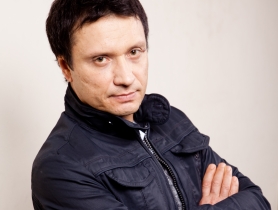
Nikolai Simonov, the set designer for the opera Der fliegende Holländer, has received wide acclaim for his work in dramatic theatre. He has designed sets for the Moscow Art Theatre, the Sovremennik Theatre, and the Theatre on Malaya Bronnaya. Within the opera community, he is known primarily for his work on Falstaff at the Mariinsky Theatre. With exactly one month to go before the première of Der fliegende Holländer, the artist kindly agreed to tell us about his vision for the production.
"When I agreed to work on Der fliegende Holländer, I had to do everything at once: listen to the music, read the libretto, compare different versions of the legend that it is based on, discuss the director’s ideas, and sketch out my own. Of course, setting an opera in a different era is nothing new, but we have, nevertheless, also opted for this device, and I will explain why.
It is very difficult to reconstruct and breathe life into a time that you never lived in, a time that for you personally is a ‘bygone age’. Our production takes place in themid-twentieth century, roughly speaking in the 1960s—1970s. The reference to time is quite loose, much as one would encounter in, say, a book on the history of costume, where we might see a drawing tagged as ‘a dress from the mid-such-and-such century’, and that serves as sufficient reference for us to grasp its context. In the loose framework of the not so distant past — those of us who did not witness that period directly were still caught up in its afterglow — the story, told through music, will come through more vibrantly and genuinely, emotions will not lose their potency, the essence will not be distorted, and the audience’s imagination will be captured.
Traditionally an opera is subject to backdrop and scenery changes, but I did not want to bog down the action in endless alterations to the set, artificially breaking up the flow. The set design will be more akin to dramatic theatre: a single construction — concise, but resonant at the same time — with all the scenes strung onto it. A waterfront, or beach cabanas, or a lounge bar somewhere by the shore — I saw something like that on the Bosphorus — and the sea in a window, ‘framed’ behind the glass. A living picture, which sooner or later will make a break for freedom. Pondering on this force of nature — one minute calm, the next aggressive — I was reminded of that dreadful, devastating tsunami a few years ago that wreaked such havoc on the islands and coastline of the Indian Ocean. The stage constructions are the colour of a very pale wood, bleached by time and hammered by the wind. The presence of the sea and the wind are felt throughout the production, and in the finale these elements wipe out everyone and everything. Failed love brings about total destruction.
What will the ship be like? Our ship is a reverie, a fantasy, like a film that excites your imagination and, as you watch it over and over again, it both remains the same and yet is different every time. At this stage, I do not want to reveal everything we have dreamed up and attempted to realize. In any case, I am not trying to construct a crossword puzzle on the stage for the audience to solve. It is more important for me to create a mood, an emotional atmosphere. The other artist defining the visual aspect of the production is the costume designer, Maria Danilova, and a great deal also depends on her ideas. Those who have seen her sketches say that the style of the costumes is reminiscent of Christian Dior: they are variations on his ‘new look’ theme, and this aesthetic choice also affects our overall vision".
"When I agreed to work on Der fliegende Holländer, I had to do everything at once: listen to the music, read the libretto, compare different versions of the legend that it is based on, discuss the director’s ideas, and sketch out my own. Of course, setting an opera in a different era is nothing new, but we have, nevertheless, also opted for this device, and I will explain why.
It is very difficult to reconstruct and breathe life into a time that you never lived in, a time that for you personally is a ‘bygone age’. Our production takes place in the
Traditionally an opera is subject to backdrop and scenery changes, but I did not want to bog down the action in endless alterations to the set, artificially breaking up the flow. The set design will be more akin to dramatic theatre: a single construction — concise, but resonant at the same time — with all the scenes strung onto it. A waterfront, or beach cabanas, or a lounge bar somewhere by the shore — I saw something like that on the Bosphorus — and the sea in a window, ‘framed’ behind the glass. A living picture, which sooner or later will make a break for freedom. Pondering on this force of nature — one minute calm, the next aggressive — I was reminded of that dreadful, devastating tsunami a few years ago that wreaked such havoc on the islands and coastline of the Indian Ocean. The stage constructions are the colour of a very pale wood, bleached by time and hammered by the wind. The presence of the sea and the wind are felt throughout the production, and in the finale these elements wipe out everyone and everything. Failed love brings about total destruction.
What will the ship be like? Our ship is a reverie, a fantasy, like a film that excites your imagination and, as you watch it over and over again, it both remains the same and yet is different every time. At this stage, I do not want to reveal everything we have dreamed up and attempted to realize. In any case, I am not trying to construct a crossword puzzle on the stage for the audience to solve. It is more important for me to create a mood, an emotional atmosphere. The other artist defining the visual aspect of the production is the costume designer, Maria Danilova, and a great deal also depends on her ideas. Those who have seen her sketches say that the style of the costumes is reminiscent of Christian Dior: they are variations on his ‘new look’ theme, and this aesthetic choice also affects our overall vision".