
20.09.2012
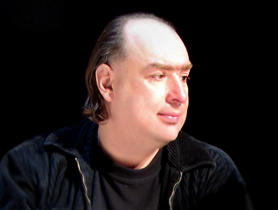
Andriy Zholdak on the idea behind the play
For me, Tchaikovsky’s opera Eugene Onegin has three distinct themes.
The first theme is the line of Fate: that’s Fate with a capital F. Each of us has a destiny. And I think in this case, the fate of Tatyana and Onegin, and of the whole story, was predestined by a higher power. My production will attempt to trace this unalterable path. At times, we want to take certain action, but our inner self resists these impulses. The love Tatyana develops for Onegin cannot be suppressed by reason or by the general culture in which her behaviour is rooted. Tatyana is a victim of her Fate, like Jesus, who was doomed to walk the path that led him to Golgotha. This is beyond logic, beyond control. This idea is the first and foremost theme of my play.
The second theme — something I’m very interested in, although it will be quite subtle — is Tchaikovsky’s own story, the story of his life. I will hide aspects of Tchaikovsky’s life throughout Onegin, because I believe that, much like Flaubert, Tchaikovsky could have said, “I am Tatyana.” Those who have read his journals know that Tchaikovsky experienced profound love, know what he went through in his relationships with his loved ones, know about his torment and anguish. While gathering materials for this production, I read his letters, and I was shocked at how profoundly loyal he was to this feeling, how many years he waited, grieved, and yearned for his love after they were separated by life.
There are many questions for the modern observer regarding Tatyana’s loyalty, which is present both in Pushkin’s text and in Tchaikovsky’s opera. Tatyana lives with Gremin; she is faithful to him, but she does not love him. Why doesn’t she follow the example of Tolstoy’s Anna Karenina? Why doesn’t she simply leave the husband she doesn’t love; why doesn’t she burn her bridges? For me, Tatyana is the key to this opera: she is almost the physical embodiment of Tchaikovsky and his staggering loyalty to these significant inner feelings.
And thirdly, the score of the opera is incredibly erotic! It puts me in mind of a large, dark forest after the rain, with raindrops resting on the leaves. In other words, it’s dripping wet: the music is drenched in wetness, eroticism, and tenderness. It’s incredibly arousing. I would really love to convey this quality of the score in my production.
I am well known for my radical approach to material. But in this case, I am trying to contain myself: instead of working against the source — which is something I love to do — I want to try to pay very close attention to the psychological motivations behind it. I want to produce a delicate psychological play, but one that will have echoes of Van Gogh and Rabelais.
The first theme is the line of Fate: that’s Fate with a capital F. Each of us has a destiny. And I think in this case, the fate of Tatyana and Onegin, and of the whole story, was predestined by a higher power. My production will attempt to trace this unalterable path. At times, we want to take certain action, but our inner self resists these impulses. The love Tatyana develops for Onegin cannot be suppressed by reason or by the general culture in which her behaviour is rooted. Tatyana is a victim of her Fate, like Jesus, who was doomed to walk the path that led him to Golgotha. This is beyond logic, beyond control. This idea is the first and foremost theme of my play.
The second theme — something I’m very interested in, although it will be quite subtle — is Tchaikovsky’s own story, the story of his life. I will hide aspects of Tchaikovsky’s life throughout Onegin, because I believe that, much like Flaubert, Tchaikovsky could have said, “I am Tatyana.” Those who have read his journals know that Tchaikovsky experienced profound love, know what he went through in his relationships with his loved ones, know about his torment and anguish. While gathering materials for this production, I read his letters, and I was shocked at how profoundly loyal he was to this feeling, how many years he waited, grieved, and yearned for his love after they were separated by life.
There are many questions for the modern observer regarding Tatyana’s loyalty, which is present both in Pushkin’s text and in Tchaikovsky’s opera. Tatyana lives with Gremin; she is faithful to him, but she does not love him. Why doesn’t she follow the example of Tolstoy’s Anna Karenina? Why doesn’t she simply leave the husband she doesn’t love; why doesn’t she burn her bridges? For me, Tatyana is the key to this opera: she is almost the physical embodiment of Tchaikovsky and his staggering loyalty to these significant inner feelings.
And thirdly, the score of the opera is incredibly erotic! It puts me in mind of a large, dark forest after the rain, with raindrops resting on the leaves. In other words, it’s dripping wet: the music is drenched in wetness, eroticism, and tenderness. It’s incredibly arousing. I would really love to convey this quality of the score in my production.
I am well known for my radical approach to material. But in this case, I am trying to contain myself: instead of working against the source — which is something I love to do — I want to try to pay very close attention to the psychological motivations behind it. I want to produce a delicate psychological play, but one that will have echoes of Van Gogh and Rabelais.