
29.05.2013
“A departure from the obvious”
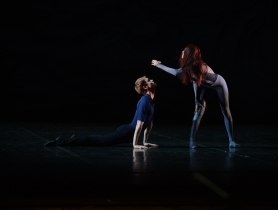
Nacho Duato’s ballet triptych Na floresta, Prelude, and Invisible has generated much discussion among theatre critics since its recent world premiere. The ballet Invisible, the title of which Izvestia called a “provocative name for a form of visual art”, has spurred a re-evaluation of the relationship between ballet and other artistic forms.
“To understand the essence of Duato’s art, we must appreciate the significance of its name,” noted RBC daily. “The choreographer uses this titular paradox to illuminate his artistic intent for theatregoers who may be more accustomed to narrative dance, calling for a departure from ‘what is obvious in art and life’”. Svetlana Naborshchikova, a critic for Izvestia, observed that “Nacho states nothing explicitly. His ballets are always about the invisible, and he is possibly the only choreographer in the world who is able to give form to this mysterious essence.”
Attempting to express the mysterious essence of the events unfolding onstage, the critics tried nevertheless to identify tangible elements from the performance. “Duato immerses the audience into the abstract conflict between man — inherently thoughtless of his surroundings — and the world’s other inhabitants, who have no choice but to adapt and suffer. It is as if he steers the traditional language of dance along the lines of literature”, wrote Maya Krilova (RBC daily).
Some critics drew parallels with Picasso’s Blue Period, which the choreographer spoke of before the premiere, while Vedomosti took a different line: “The audience keenly feels the presence of ballet’s origins — the sylph, the Wilis, unseen, yet always leading us somewhere. It was a feast for the senses. Thus St. Petersburg, the birthplace of these otherworldly romantic visions, remains tied to the living currents of ballet.”
Another interpretation was put forward by Kommersant: Olga Fedorchenko expressed her conviction that the ballet is a self-portrait of the choreographer. “An artist is looking at us, a little naive and lonely, and he is trying to connect with us. He is somewhat mysterious and severe, but deep in his soul, he is kind, and possibly happy.”
Although their interpretations differ, critics were unanimous in their admiration for the performers. In particular, special praise was reserved for Irina Perren. Sankt-Peterburgskie Vedomosti described her as a “dance virtuoso with a rarely-seen purity of line and sophisticated phrasing that suits Nacho Duato’s intricate modern choreography.” According to Igor Stupnikov, the doyen of ballet critics in St. Petersburg, the ballerina reshapes herself into “a mysterious woman, a flame rising from the earth’s core and proclaiming her arrival with the rhythmical fall of her feet.” Stupnikov ponders her true role, whether that of “a demoness, temptress, or enchantress”. Novye Izvestia suggested her to be “A wounded songbird at twilight, the dying swan of our day”, while Vedomosti reflected that she represented “either fate, or death”.
Sabina Yapparova and her “jubilant presto” in the ballet Na floresta captivated the critic at Kommersant. “She is surely the ballerina for whom Mr. Duato came to St. Petersburg.” Igor Stupnikov, writing in Sankt-Peterburgskie Vedomosti, agreed: “The striking Sabina Yapparova whirls around the stage and seems to fling drops of morning dew from her hands.” Stupnikov also noted the mastery of Leonid Sarafanov, who showed “courage and lightness in demonstrating the most difficult of variations” in the ballet Invisible.
“To understand the essence of Duato’s art, we must appreciate the significance of its name,” noted RBC daily. “The choreographer uses this titular paradox to illuminate his artistic intent for theatregoers who may be more accustomed to narrative dance, calling for a departure from ‘what is obvious in art and life’”. Svetlana Naborshchikova, a critic for Izvestia, observed that “Nacho states nothing explicitly. His ballets are always about the invisible, and he is possibly the only choreographer in the world who is able to give form to this mysterious essence.”
Attempting to express the mysterious essence of the events unfolding onstage, the critics tried nevertheless to identify tangible elements from the performance. “Duato immerses the audience into the abstract conflict between man — inherently thoughtless of his surroundings — and the world’s other inhabitants, who have no choice but to adapt and suffer. It is as if he steers the traditional language of dance along the lines of literature”, wrote Maya Krilova (RBC daily).
Some critics drew parallels with Picasso’s Blue Period, which the choreographer spoke of before the premiere, while Vedomosti took a different line: “The audience keenly feels the presence of ballet’s origins — the sylph, the Wilis, unseen, yet always leading us somewhere. It was a feast for the senses. Thus St. Petersburg, the birthplace of these otherworldly romantic visions, remains tied to the living currents of ballet.”
Another interpretation was put forward by Kommersant: Olga Fedorchenko expressed her conviction that the ballet is a self-portrait of the choreographer. “An artist is looking at us, a little naive and lonely, and he is trying to connect with us. He is somewhat mysterious and severe, but deep in his soul, he is kind, and possibly happy.”
Although their interpretations differ, critics were unanimous in their admiration for the performers. In particular, special praise was reserved for Irina Perren. Sankt-Peterburgskie Vedomosti described her as a “dance virtuoso with a rarely-seen purity of line and sophisticated phrasing that suits Nacho Duato’s intricate modern choreography.” According to Igor Stupnikov, the doyen of ballet critics in St. Petersburg, the ballerina reshapes herself into “a mysterious woman, a flame rising from the earth’s core and proclaiming her arrival with the rhythmical fall of her feet.” Stupnikov ponders her true role, whether that of “a demoness, temptress, or enchantress”. Novye Izvestia suggested her to be “A wounded songbird at twilight, the dying swan of our day”, while Vedomosti reflected that she represented “either fate, or death”.
Sabina Yapparova and her “jubilant presto” in the ballet Na floresta captivated the critic at Kommersant. “She is surely the ballerina for whom Mr. Duato came to St. Petersburg.” Igor Stupnikov, writing in Sankt-Peterburgskie Vedomosti, agreed: “The striking Sabina Yapparova whirls around the stage and seems to fling drops of morning dew from her hands.” Stupnikov also noted the mastery of Leonid Sarafanov, who showed “courage and lightness in demonstrating the most difficult of variations” in the ballet Invisible.