
20.05.2013
Der fliegende Holländer to close opera season
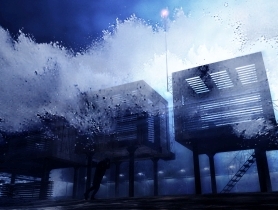
The music of Wagner is to be performed at the Mikhailovsky Theatre after a more than 40-year hiatus. Wagner’s opera Der fliegende Holländer will be back on the repertoire to mark the 200th anniversary of the birth of the great composer and conceptualist. The opera has an impressive performance history at the Mikhailovsky: staged by Kurt Sanderling in 1957, it ran for 15 seasons. The new production, which features younger musicians and performers, will continue the glorious tradition of the repertoire and do justice to the composer, who considered opera to be the highest form of art. The premières will be on 6 and 7 July. They will close the theatre’s opera season.
The new production’s musical director is Vasily Petrenko, Principal Guest Conductor of the Mikhailovsky Theatre. He believes that Der fliegende Holländer was a “huge step forward” in the development of opera at the time. “The use of leitmotifs, the development of images, and the desire for uninterrupted action (originally Wagner wanted no intervals) were all great novelties in the 1840s”, the maestro says. “The legend of the ghost ship was reinterpreted and redeveloped into a storyline by the composer himself, and all this made it into something almost completely new.” Der fliegende Holländer contains a wealth of musical descriptions of the sea, and at the same time, of all of Wagner’s operas, it is one of the most suited to chamber performance. Created during one of the most difficult periods in Wagner’s life, Der fliegende Holländer to this day remains one of the most striking examples of a life-affirming opera, in which honour and love save all, despite the obstacles. And the music, as if beating its way through a thorny path of chromaticism and dissonance, flies up to the crystal-clear stars and true, pellucid harmony.
This is the first full-length production to be staged by director and producer Vasily Barkhatov at the Mikhailovsky Theatre. He is very emotional in explaining how he relates to Wagner’s operas: “For me this has always been the story of how one person could use his heart, like a pot-belly stove, to warm an entire universe and modify it to his fantasies! It is about how someone in the modern world, for a reason known only to him, is able to convert everyone — the weary, and those who have lost faith in humanity — into the heroes of a great legend about love. Is it possible that two people can vow great and true love to each other in light of the fact that one of them has already vowed their true love to someone else? Or is it all whimsy and mock sacrifice? Then which of them is the true love?” the producer asks. We will see how this ethical dilemma troubling the director is played out at the première. For the moment, Vasily Barkhatov is sure of one thing: “This drop of water is more significant than the Biblical flood! And it is not a question of ships. The sea simply represents the endless, dreary, lonely expanse of time.”
The new production’s musical director is Vasily Petrenko, Principal Guest Conductor of the Mikhailovsky Theatre. He believes that Der fliegende Holländer was a “huge step forward” in the development of opera at the time. “The use of leitmotifs, the development of images, and the desire for uninterrupted action (originally Wagner wanted no intervals) were all great novelties in the 1840s”, the maestro says. “The legend of the ghost ship was reinterpreted and redeveloped into a storyline by the composer himself, and all this made it into something almost completely new.” Der fliegende Holländer contains a wealth of musical descriptions of the sea, and at the same time, of all of Wagner’s operas, it is one of the most suited to chamber performance. Created during one of the most difficult periods in Wagner’s life, Der fliegende Holländer to this day remains one of the most striking examples of a life-affirming opera, in which honour and love save all, despite the obstacles. And the music, as if beating its way through a thorny path of chromaticism and dissonance, flies up to the crystal-clear stars and true, pellucid harmony.
This is the first full-length production to be staged by director and producer Vasily Barkhatov at the Mikhailovsky Theatre. He is very emotional in explaining how he relates to Wagner’s operas: “For me this has always been the story of how one person could use his heart, like a pot-belly stove, to warm an entire universe and modify it to his fantasies! It is about how someone in the modern world, for a reason known only to him, is able to convert everyone — the weary, and those who have lost faith in humanity — into the heroes of a great legend about love. Is it possible that two people can vow great and true love to each other in light of the fact that one of them has already vowed their true love to someone else? Or is it all whimsy and mock sacrifice? Then which of them is the true love?” the producer asks. We will see how this ethical dilemma troubling the director is played out at the première. For the moment, Vasily Barkhatov is sure of one thing: “This drop of water is more significant than the Biblical flood! And it is not a question of ships. The sea simply represents the endless, dreary, lonely expanse of time.”